
Key Points
- The most common signs your gutter needs repair are sagging, leaking seams, cracks or holes, standing water, loose hangers, and water stains on your siding.
- Some signs show up on your house or yard, not the gutter. Examples include rotting fascia, a damp basement, and pooling water near your foundation.
- Not every sign is an emergency. A gutter pulling off the house needs attention now. A small drip at one seam can usually be scheduled.
- Properly installed gutters slope toward the downspout about 1/4 inch every 5 to 10 feet, according to InterNACHI. Standing water often means that slope is off.
- Repair usually makes sense when damage is limited to one or two spots. Widespread or repeat problems often point to replacement.
- Lehigh Valley freeze-thaw cycles make spring the best time to check for winter gutter damage.
- Gutter Twins is a top-rated, family-owned gutter company in Allentown, PA, with 600+ five-star Google reviews.
Most gutter problems start small. A drip here. A slight dip there.
The trouble is, small gutter problems rarely stay small. Water always finds the path of least resistance, and a damaged gutter sends it toward your siding, fascia, and foundation.
The good news? You can spot most warning signs from the ground in about 10 minutes.
This guide walks you through 12 signs your gutter needs repair, how urgent each one is, and when it’s time to call a pro.
What Are the Signs Your Gutter Needs Repair? The Short Answer
The main signs your gutter needs repair are sagging sections, leaks at seams or corners, cracks or holes, rust, standing water, and loose or missing hangers.
Watch for damage to your home as well, including stained siding, rotting fascia, and water pooling near your foundation. These often mean your gutters aren’t draining properly, even if the gutters themselves look fine.

Signs You’ll See on the Gutters Themselves
Start by looking directly at your gutters from the ground. A pair of binoculars helps on two-story homes.
1. Sagging or Pulling Away From the House
A gutter that dips in the middle or tilts away from the roofline is one of the clearest repair signs.
It usually means hangers have loosened or failed, or the fascia behind them has softened. Sagging sections hold water, and that extra weight makes the problem worse fast.
2. Leaks and Drips at Seams or Corners
Water dripping from joints, end caps, or inside corners during rain means the seal has failed.
Sectional gutters are especially prone to this because every seam is a potential leak point. Seamless gutters have far fewer joints, which is one reason they tend to hold up longer.
3. Cracks, Holes, or Splits
Small cracks grow with every freeze-thaw cycle.
A single small crack can often be sealed. Multiple cracks or large splits usually mean that section needs to be replaced.
4. Rust or Peeling Paint on the Gutters
Rust spots and flaking paint on the gutter itself signal that water has been sitting inside for too long.
Once rust eats through metal, patching is only a short-term fix.
5. Standing Water After It Stops Raining
Gutters should empty within a short time after rain ends.
If water sits in the channel, the gutter may have lost its slope, or a clog is blocking the downspout. According to InterNACHI, gutters should slope toward the downspout at roughly 1/4 inch for every 5 to 10 feet of run.
6. Loose Hangers or Fasteners on the Ground
Finding screws, spikes, or brackets in your mulch or lawn is a red flag.
It means your gutters are working themselves loose. Hangers carry the weight of water, debris, snow, and ice, so every missing one puts more strain on the rest.
Signs You’ll See on Your Home
Next, look at the parts of your house right below and behind the gutters.
7. Water Stains or Streaks on Siding
Dirty streaks, stains, or peeling paint on your siding show where water has been spilling over the gutter.
Look closely right under inside corners and long runs. These are common overflow spots.
8. Soft, Stained, or Rotting Fascia
The fascia is the board your gutters attach to. If it looks dark, stained, or feels soft, water is getting behind the gutter.
Rotted fascia can’t hold gutters securely. In that case, the fix may include soffit and fascia repair along with the gutter work.
9. Damp Basement or Attic Stains
A wet basement after heavy rain or water stains along the attic’s edge can both trace back to gutter problems.
These hidden signs are easy to miss and often mean the issue has been going on for a while.
Signs You’ll See on the Ground
Finally, walk the perimeter of your home and look down.
10. Pooling Water Near Your Foundation
Puddles along your foundation after rain mean water isn’t being carried far enough away.
Over time, saturated soil can lead to foundation cracks and basement leaks.
11. Trenches or Washed-Out Mulch Under the Roofline
A line of eroded soil, displaced mulch, or damaged plants directly below your gutters shows exactly where water is overflowing.
It’s one of the easiest signs to spot, and one of the most overlooked.
12. Loose, Crushed, or Short Downspouts
Downspouts that are disconnected, dented, or dumping water right at the foundation defeat the whole purpose of your gutters.
Most experts recommend discharging water at least 4 to 6 feet from your foundation using an extension or splash block.

How Urgent Is Each Sign?
Use this quick guide to decide how fast to act:
| Urgency | Signs | What to Do |
| Call now | Gutter pulling off the house, water in basement, rotting fascia | Schedule an inspection right away |
| Schedule soon | Sagging, leaking seams, cracks, loose hangers, pooling water | Book a repair within a few weeks |
| Monitor | Minor staining, a single small drip, light rust spots | Check again after the next storm |
When in doubt, have it looked at. A small repair today is almost always cheaper than water damage later.
Try This: The 10-Minute Rain Check
The easiest way to spot gutter problems is to watch them work. During a steady rain, grab an umbrella and:
- Walk the full perimeter of your home.
- Look for water spilling over the front edge or behind the gutters.
- Watch for drips at seams, corners, and end caps.
- Check each downspout to make sure water is flowing out of it strongly.
- Note where water lands. It should flow away from your foundation, not toward it.
- Take photos or a short video of anything unusual. This helps any contractor diagnose the problem faster.
Please stay on the ground for this check. Leave ladder work to the pros.
Why Lehigh Valley Gutters Take a Beating
Eastern Pennsylvania weather is tough on gutters. Here’s why:
- Freeze-thaw cycles cause trapped water to expand, which cracks seams and loosens hangers.
- Ice dams add heavy weight that can bend gutters or pull them off the fascia.
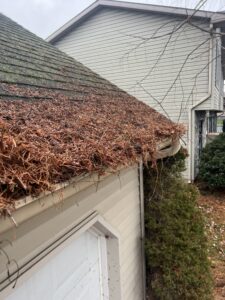
- Mature trees in many Lehigh Valley, Montgomery, and Chester County neighborhoods fill gutters fast. Clogs add weight and hold water.
That’s why spring is the best time to check for damage. Winter often leaves problems behind that only show up once the snow melts.
As one of the top-rated gutter companies serving Allentown and the surrounding areas, our crew sees these winter-related repairs every single spring.

Should You Repair or Replace Your Gutters?
Not every warning sign means new gutters. Here’s a simple way to think about it.
Repair usually makes sense when:
- Damage is limited to one or two spots
- Your gutters are less than 15 years old
- The fascia behind them is still solid
Replacement usually makes sense when:
- Problems show up along multiple sections
- You’re fixing the same issue again and again
- Rust, cracks, or sagging are widespread
- Your gutters are original to a home that’s 20+ years old
For a deeper look, see our guide on how often gutters need to be replaced.
What to Expect From a Professional Gutter Repair
When you call Gutter Twins for gutter repair, here’s how it works:
- We inspect the whole system, not just the spot you noticed.
- We explain what we find, clearly and honestly, so you understand your options.
- You get a straightforward quote with no pressure.
- Our own trained crew does the work. We never subcontract.
- We clean up completely before we leave.
Every repair is backed by our warranty, and we offer a 5% discount for seniors and military members.
That process is a big reason we’ve earned 600+ five-star reviews from homeowners across the Lehigh Valley and beyond.

FAQ: Signs Your Gutter Needs Repair
What is the most common sign of gutter damage?
Sagging is one of the most common signs. It usually means hangers have loosened or the fascia has weakened, and it often causes water to pool and overflow.
Can a leaking gutter be repaired, or does it need replacing?
Most leaks at a single seam or corner can be repaired by resealing the joint. If leaks appear at many seams, or the metal is rusted through, replacement is often the better long-term choice.
What causes gutters to pull away from the house?
The most common causes are failed hangers, rotting fascia, heavy debris, and ice buildup. Once a gutter starts pulling away, the problem usually gets worse quickly.
Can clogged gutters cause damage that needs repair?
Yes. Clogs add weight and hold water, which stresses hangers and seams. Regular gutter cleaning is one of the best ways to prevent repairs.
How long does a typical gutter repair take?
Most common repairs, like resealing seams, reattaching hangers, or fixing a downspout, can be completed in a single visit.
When is the best time to check gutters for damage?
Early spring, after the snow melts, and late fall, after the leaves drop. It’s also smart to check after any major storm.
Get Your Free Gutter Repair Estimate
If you’ve spotted any of these warning signs, don’t wait for the next big storm to see how bad it gets.
Gutter Twins is a local, family-owned team proudly serving Allentown, the Lehigh Valley, and surrounding counties. We’ll give you an honest answer on whether a repair will do the job or it’s time for something more.
Get your free estimate today, or call us at (484) 514-1718.